Recently in Mobile Category

Mobile software and cellular data.

  1. Feb06

    iPhone web app performance

    iPhone iPod touch web apps

    The Exceptional Performance group at Yahoo! just released a detailed performance analysis of web applications on the iPhone. Yahoo! analyzed the full capabilities of the iPhone's Safari browser including browser cache and transfer speeds.

    Cache persistence

    The Safari browser on iPhone allocates memory from the shared system memory but does not save web content into persistent storage. Any cached objects (CSS, JavaScript, images, etc.) are removed from memory on reboot.

    Optimal component size

    Safari for iPhone will only cache files 25 KB or smaller served using the Expires explicit expiration time or Cache-Control max-age directive HTTP headers. Safari decodes the file before saving it cache, meaning your total unzipped file size must squeeze under the 25 KB ceiling to hit the cache. Components already in cache are only replaced by new cacheable components using the least recently used algorithm.

    Safari for iPhone is able to cache a maximum of 19 external components, placing a maximum cache limit at around 475 KB.

    Download speed

    Yahoo! found typical download iPhone download speeds vary from 82 kbps to 150 kbps when connected to a GSM cellular data network. Wi-Fi connections over an 802.11b/g networks obviously speed up the experience, but pages should assume cellular data load times when designing for a compelling user experience.

    Summary

    Works with iPhoneWeb applications built for the iPhone's Safari browser need to specifically target web performance these small devices and special cache rules. Desktop browser best practices such as zipped components and combined files for CSS and JavaScript may be too bloated for the Safari mobile browser. A few tips:

    • Limit cacheable components to a decompressed size of 25 KB or less
    • Limit yourself to 19 or less cached components
    • Minify CSS and JavaScript for slimmer file weights.
    • Use CSS sprites to combine multiple small images into a shared image under 25 KB
  2. Apr19

    Nokia Widgets for Series 60

    Weatherbug widget Nokia N95

    Widgets are coming to Series 60 handsets this Fall, bringing tiny pieces of content onto the application menu of the world's best-selling smartphone OS. The S60 Web Run-Time builds upon the existing open source technologies in the S60 browser and provides a development experience very close to Apple's Dashboard widget environment. The widget software will be available in version 3.2 of Nokia's operating system due out this Fall. The Series 60 operating system is currently installed on over 85 million mobile devices produced by Lenovo, LG, Nokia, and Samsung.

    S60 widgets are marked up using HTML, CSS, and JavaScript tied together with a platform manifest. Plugins such as Flash Lite are currently not available inside the Web Run-Time environment to help minimize the total software footprint. S60 widgets appear on the application menu just like a native phone application, loading a locally stored user interface, content frame, and rich interaction supplemented with fresh data pulled in from the web over cellular data or a WiFi network. The load time is almost instant, unlike many of the mobile Java applications I have used. The user simply selects their content of choice launched on demand from a quick launch bar or application menu.

    Any developer familiar with widget development inside personal homepages or Apple's Dashboard environment should be able to easily port their work to Nokia's S60 widget environment. Both Apple and S60 use the open source WebKit browser engine to render widgets. The mobile platform requires a few specialized changes such as adjusting how you collect a user preference such as a ZIP Code or a Flickr account name and altering your graphics display for a mobile phone's small screen, colors, and resolution. WeatherBug ported their Apple Dashboard widget to S60 and claims the entire process took about 5 days.

    The Web Run-Time and its widget environment is separated from the rest of the operating system for security reasons, but Nokia does plan to expose more functionality in future releases. Future widgets will be able to receive GPS data, access a local address book, and possibly even place phone calls. Imagine a widget responding to its local environment, narrowing a local search to 5 minute walking distance, and possibly messaging your nearby friends to come join you.

    Widget distribution

    S60 users will be able to download new S60 widgets directly to their phones from the Nokia mobile portal and from the WidSets distribution site. Any widget can also be sent to your phone and swapped with friends using the built-in Bluetooth connection.

    Summary

    Nokia smartphones are not readily available in the U.S. but they are a dominant force in Europe. Mobile-savvy European customers will soon have a new way to access their favorite mobile content inside a richer user interface than a traditional mobile browser window. Web content is as close as the quick launch bar, allowing web applications to earn their spot on the phone's home screen.

    Apple's iPhone will have similar functionality on a larger display at a higher resolution but limited to EDGE cellular data transfer rates and latency. Both Nokia and Apple will be subject to the content wishes of mobile carriers, who could continue to make life difficult to place content on a mobile handset utilizing their networks.

    I'm a fan of the new S60 Web Run-Time as yet another way to extend the reach of web content through widgets. The announced features open up the world of mobile content to developers with a web authoring skill set and creates a lot more content for the S60 platform.

  3. Feb12

    Nokia releases H.264 video podcatcher

    Nokia N95 video playback

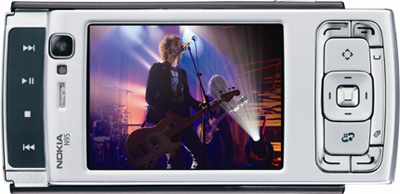
    Nokia announced a new mobile feed reader focused on video today at the 3GSM conference in Barcelona. The Nokia Video Center comes pre-installed on new Nokia Series 60 devices such as the newly announced N95 and N93i but is also available as a separate download for compatible devices. You can load videos onto the phone through your home computer or receive updates over-the-air at HSDPA speeds or using open WiFi while you're on the go.

    Nokia Video Center

    The Video Center software supports H.264 videos, meaning videobloggers have even more reasons to create specially formatted and mini-sized (320x240) versions of their show for iPods and Nokia phones. YouTube will soon release its videos in H.264 according to the Nokia announcement. Media RSS is supported (and encouraged) and publishers can send users a special MMS to assist in the subscription process.

    The Nokia N95 comes with 160 MB of internal storage with up to 2 GB available via a microSD memory card. Mobile videos will make most sense for people with a large memory card always in their smartphones since internal storage will fill up fast.

    The Nseries phones are more popular in Europe than the U.S. -- they are quad-band but no carriers here offer them -- but the popularity of the world's most popular cell phone brand might drive some new video subscribers in regions where DMB is already popular and built-in to most new phones.

  4. Oct13

    Bluetooth transfer of webpage data

    TransSend button

    The Bluetooth SIG announced wireless transfer of contact, calendar, and notes information via what it's calling TransSend. It implements the OBEX standard you may have used to "beam" someone your contact information in the past. You can send vCard, vCal, vNote, plain text, or image files from a PC to supporting handsets.

    An ActiveX plugin for Internet Explorer lets users send content from a web page to their mobile phone. You can send driving directions, your contact info, or event data.

    Sounds cool, but it looks like the plugin is relying on proprietary markup for recognition instead of using something like microformat markup. According to Phone Scoop not many U.S. have an open OBEX profile, further limiting the usefulness of the extra markup.

  5. May18

    Google Reader Mobile

    Google Reader mobile

    Google Reader Mobile is now available on your mobile phone. The pages are served using XHTML 1.0 for mobile, including access keys for each list item.

    The mobile reader is a good blend of what you would like to configure on your desktop but still access on a more limited input device such as a mobile phone. The mobile interface is purposefully barebones but utilizes features made possible by the full desktop experience such as browsing tagged posts.

  6. May16

    Nokia adds Google to Internet Tablet

    Nokia 770 default start page

    Nokia announced an upgrade to the 770 Internet tablet operating system and bundled hardware this morning at the VON Europe Conference in Stockholm, Sweden. The new operating system, now named Internet Tablet OS 2006, features Google search and IM functionality built-in, including prominent display on the homepage and task bar. Nokia 770 owners can now chat with friends using text and voice from their Internet tablets.

    Nokia developed the IM and VoIP based on XMPP and Google's libjingle extensions. The voice and text screens are branded with the Google Talk logo, including the beta designation. The Gizmo Project will supposedly release its own client software for the Nokia 770 but it will not be bundled with the OS.

    Google is also the default search provider on the device. Mobile phones and their operating systems have become a hot space for search competition recently, with both Google and Yahoo! actively competing for integration with Nokia handsets. So far it's Google on Linux devices and Yahoo! on Symbian devices.

    I had a look at an early version of GTalk for the Nokia 770 a few months ago and the newly demonstrated application is a big improvement in user experience. The current Gaim-based clients for the Nokia 770 don't have the customized interface to make them a pleasure to use. I'll install the OS update on my Nokia 770 when it becomes available and see what it's like. Few to none of my buddy list is currently on GTalk or Jabber.

  7. May02

    Helio on Top feed reader

    Helio on Top

    Helio just launched, and every phone has a feed reader combined with unlimited data service. The reader is named "Helio on Top," displaying new messages on the bottom third of your screen as they come in. Selecting the message displays the full article and you can also browse through three items or channels at a time. Helio on Top is graphically very similar to Motorola's Screen3 reader.

    I like the small square images on the left of each alert. Given the tiny screen it's important for these images to add context but also create a more comporting feeling that the user is not just buried in text.

    Tags:
  8. Apr28

    Nokia Series 60 podcatcher

    Series 60 podcasting main menu

    Nokia plans to release a podcast client for its latest smartphone lineup in early July. The application takes advantage of 3G cellular data networks and/or nearby WiFi hotspots to deliver new audio content to your phone right after it's published. Users can search for podcasts but it's not clear who is providing the directory and search content for Nokia.

  9. Mar16

    GRiD Computing event

    GRiD Compass 1101

    Last night I attended a talk at the Computer History Museum about the early history of portable computing highlighting GRiD Computing as one of the pioneers in the space.

    Some interesting facts:

    • GRiD was one of Silicon Valley's first stealth companies (back in 1981). Most employees did not know what they were working on until after they were hired.
    • Co-founder Dave Paulsen told a story about sourcing parts from all over the world to try and find already manufactured components that could work in a small form-factor PC. They found their electro-luminescent displays while flipping through a Japanese electronics catalog and seeing a panel advertised by Sharp as a light bulb replacement that could fill your whole room with soft light.
    • GRiD laptops were used in space for over a decade. After the Challenger explosion in 1986 the GRiD computers were recovered and still worked!
    • Presidents carried GRiD computers with them in case of nuclear emergencies. It was one of the tools inside "the football." The laptop allowed cabinet officials to leave Washington without fear of being out of touch with their nuclear arsenal.
    Jeff Hawkins business card

    At the end of the talk I had the chance to speak with Jeff Hawkins and check out his GRiD from back in the day. A definite uniquely Silicon Valley type of night.

    Check out my full photoset from the talk, including some of the early marketing materials of GRiD.

  10. Mar14

    VOIP and mobile integration podcast

    In this week's PodSession Om and I discuss voice and mobile technologies currently available for platform integration. When does it make sense for a web application to add voice or mobile capabilities? What are the costs and benefits?

    Are so called "web 2.0" companies just shinier versions of existing applications? Is anyone actually pushing the envelope and inventing entirely new industries? IP-based voice applications have already changed the way we think about communicating online. Mobile phones are now common tools of daily communication with relatively fast data connections with always-on access to the Web and focused data. Why are we not seeing more integration of voice and mobile into new web applications?

    Google Local and Windows Live Local search products are just starting to launch pay-per-call advertising on their sites, connecting any computer with a paying merchant over a telephone line. Other companies such as Progressive Auto Insurance are integrating support call centers with web applications to help complete sales.

    Now that conference season is in full swing startup companies can walk through the halls of focused gatherings such as VON or CTIA to gather new ideas about product integration across multiple mediums and devices.

    This week's PodSession, VoIP and mobile integration, is 23 minutes long, a 11 MB download.

Niall Kennedy Niall Kennedy is a web technologist in San Francisco, California in the United States. I am very interested in the world of... MORE »

Search this weblog:

Subscribe:

Latest feature: Widget development

Archives: Popular Categories

Sites: More from Niall